Mirror Crossword lovers tend to fall into two camps: people who want a familiar daily solve, and people who love a twist—something that makes your brain take a different route than it does in a standard Monday-through-Sunday grid. A mirror crossword sits right in that sweet spot. It’s recognizable enough that a regular solver won’t feel lost, but it adds a clever visual or structural rule that changes how you read the grid and how you make deductions.
If you’ve ever noticed that many crosswords look “balanced,” or you’ve solved a puzzle where one half of the grid seemed to echo the other, you’ve already brushed up against the mirror idea. In this article, I’ll walk you through what a mirror crossword is, where the concept comes from, how it typically works, and the best ways to solve (or even create) one. You’ll also get practical tips, common pitfalls to avoid, and answers to the questions people ask most when they first encounter mirrored crossword formats.
What Is a Mirror Crossword?
A mirror crossword is a crossword puzzle designed around reflection symmetry—meaning the grid (and sometimes the answers or clue relationships) are structured so that one part “mirrors” another part, like looking at it in a mirror.
That mirroring can show up in a few different ways:
- Mirrored grid layout (most common):
The black squares (blocks) are placed so the left side reflects the right side (vertical mirror), or the top reflects the bottom (horizontal mirror). This is different from the more typical rotational symmetry you see in many American crosswords. - Mirrored entries:
Answers may appear in matching positions with a relationship—sometimes identical answers, sometimes paired answers that relate by theme, spelling, or wordplay. - Mirrored clue/numbering structure (less common):
Clue numbering, entry lengths, or even clue wording may be intentionally paired across the reflection line.
When most solvers say “mirror crossword,” they mean the first type: a grid with bilateral (mirror) symmetry rather than the classic 180-degree rotational symmetry used in many U.S. newspaper crosswords. But the best mirror crosswords go beyond aesthetics and use the mirror concept as part of the solving logic.
History and Background: Where the “Mirror” Idea Comes From
Symmetry has been part of crosswords almost from the beginning, partly because it looks clean and professional, and partly because constraints create better puzzles. When constructors have to follow a symmetry rule, they often make tighter fill choices and cleaner grids.
In the U.S., mainstream crosswords (think major newspapers and many popular apps) commonly use rotational symmetry: if you rotate the grid 180 degrees, the pattern of black squares matches. That’s become a standard expectation in American-style themeless and themed crosswords.
A mirror crossword leans into a different design tradition—reflection symmetry—which has appeared in:
- Specialty puzzle books and variety puzzle collections
- Some online crossword platforms that feature experimental or “variant” puzzle types
- Themed puzzles where the “mirror” is part of the gimmick (for example, two halves that behave like twins)
The mirror concept also shows up in other word puzzles—palindromes, ambigrams, reversible phrases—so it’s a natural fit for crossword innovation. Puzzle designers love any constraint that creates “aha” moments without requiring a totally new set of rules.
How a Mirror Crossword Works
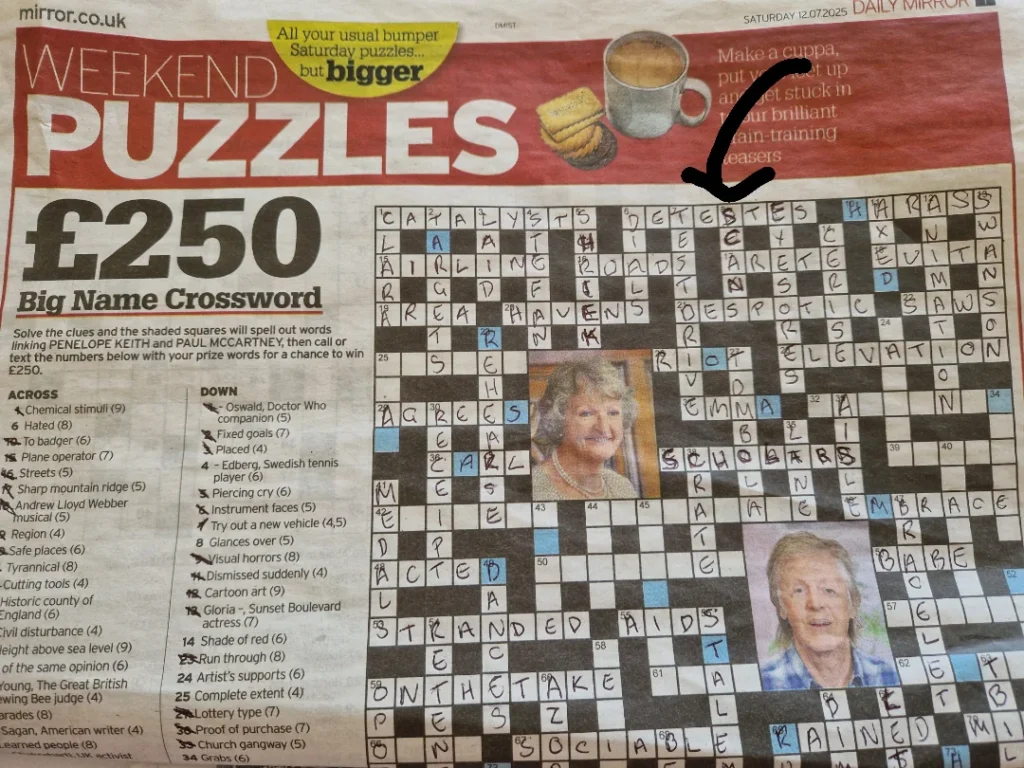
The key to understanding a mirror crossword is to ask: What exactly is being mirrored? The answer determines how you approach the solve.
Mirror Symmetry in the Grid
In a mirror-symmetric grid, the blocks reflect across an axis:
- Vertical mirror symmetry: left side mirrors right side
- Horizontal mirror symmetry: top mirrors bottom
- Both (rarer): some grids mirror in more than one way, which can be extremely restrictive
That means if there’s a black square at row 5, column 3, you’ll also see a black square at row 5, column (width − 2), assuming 0-based indexing. In plain English: the pattern on one side is the reverse image of the other side.
For solvers, this can help in a subtle way. Once you get used to it, you start to “feel” where blocks must be, and you can predict the lengths of entries across the reflection line.
Mirrored Entries (Theme-Based Mirroring)
Some mirror crosswords add a second layer: answers themselves are paired. Common approaches include:
- Identical answers in mirrored positions (uncommon in standard crosswords, but it exists in special formats)
- Synonym pairs (e.g., “BEGIN” mirrored with “START”)
- Before/after pairs (e.g., “INHALE” mirrored with “EXHALE”)
- Wordplay pairs (e.g., an answer and its reversed spelling, or a “reflected” version using letter substitution)
A constructor might even draw attention to the mirror axis with a central entry like “LOOKINGGLASS,” “REFLECTION,” or “MIRRORIMAGE.”
Two-Grid Mirror Crosswords (A Fun Variant)
In some puzzle formats, a “mirror crossword” refers to two separate grids where one is the mirror of the other. The twist might be:
- You fill one grid, and the other fills automatically by mirroring the letters
- Clues apply to one grid, while the other is derived
- Some entries are clued in one grid and unchecked in the other, raising the difficulty
If you run into a two-grid mirror crossword, read the instructions carefully. These puzzles can be extremely elegant, but they’re not always self-explanatory if you assume it’s a normal crossword.
Main Features of a Mirror Crossword
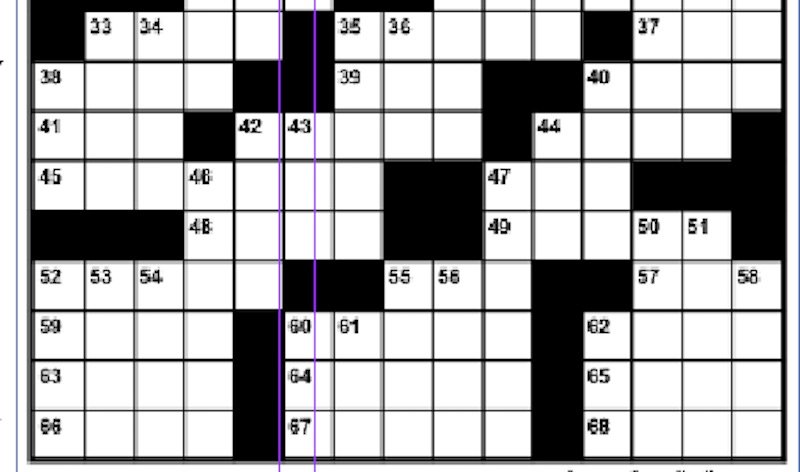
A good mirror crossword tends to have a few recognizable traits:
Symmetry You Can See Immediately
Even before you solve anything, the grid looks intentionally balanced—like the designer cared about the visual geometry, not just the words.
Paired Entry Lengths
Because the grid mirrors, entry lengths often come in mirrored pairs. If you find a 9-letter Across on the left side, there’s likely a 9-letter Across in the corresponding spot on the right.
Central “Spine” or Axis
Many mirror crosswords have a visual center line. Sometimes that line is just implied by the grid; other times there’s a central column/row with important theme material.
Theme That Matches the Structure (Best Case)
The most satisfying mirror crosswords make the mirroring mean something. When the theme reinforces the grid design, solvers get that “of course!” feeling—the kind you remember later.
Benefits and Advantages
Why bother with a mirror crossword when you could just solve a regular one? A few reasons, and they’re not just novelty.
It Trains Pattern Recognition
Mirror symmetry nudges your brain toward noticing structure. Over time, you get faster at:
- predicting answer lengths
- spotting likely block placements
- using one solved area to infer another
That’s a transferable skill across lots of puzzle types.
It Adds Fair Constraints (When Done Well)
Constraints can actually make puzzles fairer. A mirrored layout can reduce randomness because the grid’s structure is less “wild,” which often leads to more consistent clueing and cleaner fill.
It’s More Engaging Than It Sounds
A mirror crossword isn’t just “a pretty grid.” Once you recognize the reflection logic, you start using it actively. That’s when the format becomes interactive and strategic rather than decorative.
It’s Great for Themed Creativity
From a constructor’s perspective, mirroring opens doors: dual answers, paired concepts, “before/after” halves, contrasts, twins, opposites—there’s a lot to play with.
Common Uses and Applications
Mirror crosswords show up in a few places, and you may not always see them labeled explicitly.
Variety Puzzle Collections
Puzzle books and specialty sites often include mirror crosswords alongside other variants like cryptics, diagramless crosswords, and acrostics.
Classroom and Learning Settings
Teachers and tutors sometimes use mirrored puzzles to reinforce:
- spelling patterns
- vocabulary pairs (synonyms/antonyms)
- language symmetry concepts (like palindromes and reversals)
Brain-Training and Cognitive Hobby Solving
If you enjoy puzzles as mental fitness, mirrored formats offer a new kind of workout without requiring you to learn an entirely new puzzle language.
Constructor Practice
New constructors sometimes try mirror symmetry as a design challenge. It’s a strong way to learn how grid constraints affect fill quality.
Important Things Readers Should Know Before Solving
Before you dive into a mirror crossword, keep a few reality checks in mind.
Not Every “Mirror” Puzzle Is the Same
One mirror crossword might only mirror the black squares. Another might mirror answers or clue relationships. Always look for a brief instruction line—especially in apps and puzzle books.
Mirror Symmetry Is Different from Standard U.S. Rotational Symmetry
If you’re used to American newspaper puzzles, you’re trained to expect rotational symmetry. Mirror symmetry can feel slightly “off” at first, even if it’s perfectly valid.
The Mirror Can Help You… Indirectly
Most mirror crosswords don’t let you “copy” letters directly across the axis. The advantage is more about structure: mirrored entry lengths, mirrored block placement, and theme pair expectations.
Theme Density Can Be Higher
Some mirror crosswords feel theme-heavy because the constructor is pairing entries across the grid. That can be great—unless you’re solving without noticing the pairing strategy. Once you see it, the puzzle often becomes much smoother.
Expert Tips and Best Practices
If you want to get good at mirror crossword solving, here are strategies that actually move the needle.
Start Where the Grid Gives You the Most Crossings
Mirror symmetry often produces similarly constrained areas on both sides. Look for:
- longer entries near the center
- places with many crossings close together
- theme entries (often longer, more clueable)
A strong foothold in one section tends to create momentum across the whole grid.
Pay Attention to the Axis
Is there a center column or row that feels special? Sometimes the constructor uses it as a “spine” for theme material or a revealer clue. If you identify the axis early, you’ll understand what’s being mirrored and how strictly.
Use Mirrored Entry Lengths to Confirm Guesses
Even when letters don’t literally mirror, the shape does. If you’re unsure between two answers, check whether the mirrored position suggests the constructor’s intent. For example, if the mirrored answer is clearly a plural noun, maybe the one you’re debating should match that grammatical style.
Expect Pairing: Synonyms, Antonyms, or Two Halves of a Concept
When you solve one side, ask yourself: “What would be the mirror partner?” You won’t always be right, but this mental habit is powerful in themed mirror crosswords.
Don’t Ignore Fill Quality Clues
Mirror constraints can make constructors lean on certain letter patterns. If you see weird crossings, take a breath and double-check the clueing. It might be a lesser-known proper noun, a variant spelling, or an abbreviation you can confirm by crossings.
Common Mistakes to Avoid
Mirror crosswords are friendly once you understand them, but a few traps catch people repeatedly.
Mistake 1: Assuming Letters Mirror Exactly
Many solvers assume that if the grid is mirrored, the letters must copy across. Usually, they don’t. Unless the instructions explicitly say so, treat mirroring as structural, not letter-for-letter.
Mistake 2: Forcing Standard Symmetry Expectations
If you keep trying to “rotate” the pattern in your head, a mirror crossword can feel wrong. Let it be mirrored. The constraint is different.
Mistake 3: Overcommitting Early
Because the grid looks orderly, people sometimes lock in a guess too soon. The truth is that any crossword—mirrored or not—can punish overconfidence. Pencil in uncertain entries mentally, and confirm with crossings.
Mistake 4: Missing the Theme’s Mirroring Logic
If answers are paired conceptually, you’ll waste time if you treat each clue in isolation. When something feels oddly clued, it may be because it’s part of a pair.
Mistake 5: Ignoring the Center
In many mirror crossword designs, the center carries the “explanation.” If there’s a revealer clue, it’s often near the axis. Skipping it can make the puzzle feel harder than it is.
Challenges and Solutions
A mirror crossword can be a joy, but it comes with a few built-in challenges. Here’s how to handle them.
Challenge: The Grid Feels Unfamiliar
Solution: Treat it like a normal crossword for the first five minutes. Get some footholds. Once you have a few entries, step back and look at the shape again—then you’ll “see” the mirror and use it.
Challenge: Theme Pairs Aren’t Obvious
Solution: After solving a couple of longer answers, look at their mirrored counterparts. Ask what relationship might connect them: opposite, synonym, “before/after,” category match, or wordplay transform.
Challenge: Unusual Fill
Because mirroring can restrict construction, you may see more abbreviations or niche entries than you’d expect in a standard daily puzzle.
Solution: Don’t panic. Lean on crossings, and be willing to accept a term you don’t personally use if it’s fairly clued and cross-validated.
Challenge: Two-Grid Mirror Rules Confuse Solvers
Solution: Read the instructions twice and test them with a short entry. If the rule is “mirror letters into the other grid,” fill one answer and see how it maps. Once that clicks, the whole format usually becomes straightforward.
Frequently Asked Questions (FAQs)
1) Is a mirror crossword the same thing as a regular crossword with symmetry?
Not exactly. Many regular American crosswords use rotational symmetry, where the grid matches after a 180-degree rotation. A mirror crossword uses reflection symmetry—left-to-right or top-to-bottom—so it looks like one half is the mirror image of the other. Some puzzles may also mirror answers or theme relationships, not just the block pattern.
2) Do the answers in a mirror crossword have to be the same on both sides?
Usually no. Most mirror crosswords only mirror the grid structure, not the letters. However, some themed mirror crosswords intentionally pair answers across the axis (synonyms, opposites, related phrases), and a few specialty formats actually duplicate or transform entries in mirrored positions. Always check the puzzle’s instructions or theme clues.
3) Are mirror crosswords harder than standard crosswords?
They can be, but not always. If the mirror concept is only visual, difficulty depends on clue writing and fill—just like any crossword. If the puzzle includes mirrored wordplay or paired entries, it may feel trickier at first, but the extra structure can also make it easier once you spot the pattern.
4) How do I spot the “mirror axis” quickly?
Look for the central line where the grid appears to reflect. In a vertically mirrored grid, the center is often a column (or the space between two columns) where left and right match. In a horizontally mirrored grid, it’s a row. If there’s a prominent long entry near the center, that can be a hint the constructor wants you to notice the axis.
5) What’s the best strategy if I’m stuck on one half of the puzzle?
Shift attention to the mirrored region that corresponds structurally. Even if letters don’t copy, the mirrored section often has the same entry lengths and a similar density of blocks, which can make it easier to get traction. Also hunt for theme entries; mirror crosswords often use paired theme answers that unlock each other.
6) Can a mirror crossword include reversed or backward answers?
It can, but that’s a specific variant. Standard American crosswords almost always place answers left-to-right (Across) and top-to-bottom (Down). If a mirror crossword uses reversed entries, it should be explicitly indicated, often with special instructions or clue conventions. If you suspect reversals but see no instructions, it’s more likely you’re overthinking a tough clue.
7) Are mirror crosswords common in U.S. newspapers?
They’re less common than rotationally symmetric puzzles, which are the norm for most major U.S. outlets. That said, mirror symmetry appears in specialty puzzles, themed bonus puzzles, and online platforms that publish experimental formats. If you like variety crosswords, you’ll run into mirror grids more often.
8) What should constructors consider when building a mirror crossword?
From a construction standpoint, mirror symmetry is a real constraint. A few best practices help:
- Choose a theme that benefits from pairing or reflection
- Keep fill clean and avoid forced abbreviations where possible
- Make the “mirror” concept discoverable (a revealer clue helps)
- Test-solve carefully, because mirrored layouts can create repeated awkward letter combinations if you’re not careful
9) Do mirror crosswords help you become a better crossword solver overall?
Yes, in a practical way. They sharpen pattern recognition, encourage you to think structurally, and teach you to look for meta-level logic (like paired concepts). Those habits carry over to themed crosswords, diagramless puzzles, and even cryptic-style clue interpretation.
10) Where can I find mirror crossword puzzles to try?
You’ll most often find them in:
- variety crossword books and puzzle magazines
- crossword apps that offer “special formats”
- online puzzle communities and indie constructor sites
If you’re searching online, try terms like “mirror crossword,” “mirror symmetry crossword,” “mirror-image crossword,” and “variety crossword mirror grid.”
Conclusion
A mirror crossword takes something solvers already appreciate—structure—and makes it part of the fun. Sometimes that mirroring is purely visual, giving you a grid that reflects neatly across an axis. Other times it goes deeper, pairing answers or theme ideas so the puzzle feels like two halves in conversation with each other.
If you’re new to the format, the best approach is simple: start solving normally, then let the mirror reveal itself. Watch the axis, notice paired entry lengths, and stay open to the idea that one side of the grid might “explain” the other. With a little practice, mirror crosswords become the kind of puzzle you actively look for—because they don’t just test your vocabulary; they reward the way you think.