
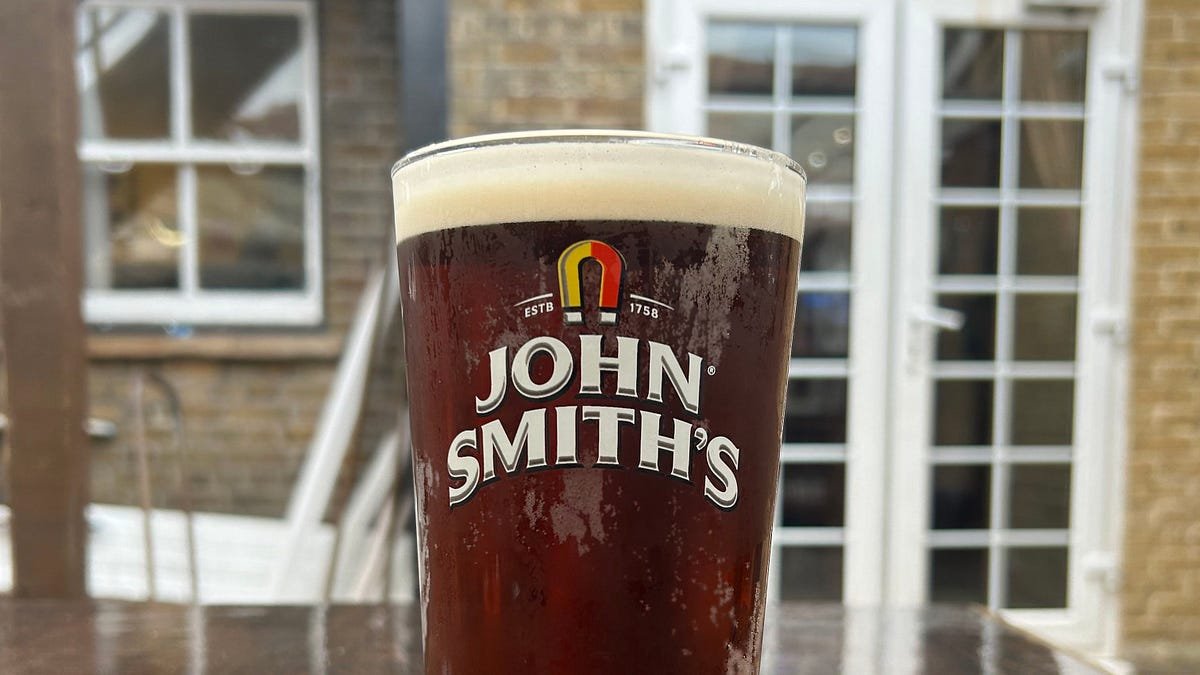
Few British beers have the same instantly recognizable identity as John Smiths. Mention it in a pub and people don’t just think of “a pint”—they picture that distinctive creamy head, the smooth mouthfeel, and a no-nonsense, sessionable character that’s been part of British drinking culture for generations. Yet for something so familiar, John Smiths is often misunderstood. Some people only know the nitrogenated version served in many pubs. Others remember it as a classic bitter with a firmer, more traditional edge. And plenty of drinkers enjoy it regularly without ever digging into what makes it taste the way it does.
This guide is designed to change that. You’ll learn what John Smiths is, where it came from, how it’s made, what it should taste like when it’s in top condition, how to order and serve it like someone who knows their beer, and how to avoid the common disappointments that lead people to assume “it’s just a bland pint.” By the end, you’ll be able to tell a great pint from a tired one—and you’ll know exactly how to get the best experience from this Yorkshire icon.
What Is John Smiths?
John Smiths is best known as a classic British bitter associated with Yorkshire brewing traditions. In everyday pub conversation, when someone says “John Smiths,” they’re usually referring to the brand’s smooth, easy-drinking bitter—often served on nitrogen (or a nitro-style dispense) for a creamy head and softer mouthfeel.
At its heart, John Smiths sits in the bitter family: balanced malt, gentle hop character, and an emphasis on drinkability. It’s built for pints, not tiny tasting glasses. The goal isn’t to overwhelm you with hop fireworks or heavy sweetness—it’s to keep you coming back for the next sip.
Where John Smiths Fits in the Bitter Family
To understand John Smiths properly, it helps to know the bitter spectrum:
- Ordinary bitter: lighter body, modest alcohol, very drinkable
- Best bitter: more malt presence, fuller flavor, slightly higher strength
- Extra special bitter (ESB): richer, stronger, often more complex
John Smiths is commonly positioned as a smooth, session-friendly bitter experience—more about balance and consistency than intensity.
The Story and Heritage Behind John Smiths
John Smiths is closely tied to Yorkshire and the long-standing brewing culture of northern England, where bitters have historically been brewed to be satisfying without being heavy. Yorkshire brewing has its own identity: practical, consistent, and focused on the pub pint.
Over the decades, John Smiths became a staple in pubs and households, not because it tried to be flashy, but because it delivered familiarity. That reliability—when the pint is well kept—is a big part of why people still seek it out. It’s also why debates about “old-school” versus “modern” John Smiths can get surprisingly passionate. When a beer becomes part of routine and memory, small changes feel big.
John Smiths Flavor Profile: What You Should Taste
A properly served pint of John Smiths should feel smooth, balanced, and quietly flavorful. It’s not meant to taste like caramel syrup or hop tea. Think clean malt backbone, restrained bitterness, and a finish that invites another sip.
Aroma
Expect subtle notes rather than a huge nose:
- Light to medium malt character (think bread crust, biscuit)
- A gentle, earthy hop suggestion
- A faint creamy sweetness in the background (more noticeable on nitro)
If the aroma seems completely absent, the beer may be too cold or the glass may be interfering with the head and release of aroma.
Taste
John Smiths typically delivers:
- Biscuity malt and soft toffee-like hints (not sugary)
- Mild bitterness that balances rather than dominates
- A clean finish without harshness
If it tastes thin and watery, that’s often a serving temperature or freshness issue rather than “the recipe.”
Mouthfeel and Head
This is where John Smiths stands out for many drinkers. When nitrogenated, it can have:
- A creamy, dense head
- A softer, rounded mouthfeel
- Lower perceived bitterness (nitro can smooth edges)
If the head collapses quickly or looks bubbly and loose, the glass may be dirty or the dispense may be off.
John Smiths on Nitro vs Cask: Why It Matters
One of the biggest reasons people disagree about John Smiths is that they’re sometimes talking about different dispense methods.
Nitro-Style John Smiths (Smooth Pour Experience)
This is the version many people know: the creamy head, the smooth texture, and the subdued bite. Nitro dispense can make a bitter feel:
- Less prickly than CO₂ carbonation
- More “creamy” and rounded
- Slightly sweeter in perception, because bitterness feels softer
It’s an approachable profile, especially for drinkers who find traditional cask bitterness a bit sharp.
Cask Bitter (The More Traditional Expression)
Cask-conditioned bitter typically shows:
- Softer natural carbonation (but different from nitro creaminess)
- More visible malt-and-hop character
- A fresher, more “alive” pub-pint feel when well kept
If you have the chance to try John Smiths in different formats, do it. You’ll understand the brand far better by tasting how dispense changes the drinking experience.
How John Smiths Is Made (In Plain English, With Real Detail)
Even if you’re not a brewer, understanding the basics helps you appreciate why John Smiths tastes the way it does—and why poor handling can flatten it.
The Grain Bill: Building the Body
Most bitters rely on pale malt as the base—this provides the bready, biscuity foundation. Small additions of specialty malts can add:
- Light amber color
- Gentle toasted notes
- A hint of toffee or nuttiness
The trick is restraint. John Smiths isn’t designed to taste like dessert. It’s designed to feel satisfying at pint volume.
Hops: Balance Over Punch
Traditional bitter hopping tends to lean toward earthy, herbal, and gently floral profiles rather than modern tropical fruit. In a beer like John Smiths, hops are used to:
- Balance malt sweetness
- Add a clean bitter finish
- Keep the beer refreshing rather than heavy
If you’re expecting a modern IPA hop explosion, you’ll miss what the beer is trying to do.
Yeast and Fermentation: The Quiet Backbone
Yeast shapes:
- Subtle fruity notes (which should be restrained)
- Clean finish and drinkability
- The overall “pub bitter” character
Fermentation choices can make the difference between a crisp pint and one that tastes muddled.
Water: The Underappreciated Ingredient
Water chemistry plays a huge role in bitters, especially in how bitterness presents. Many classic British brewing regions have water that accentuates a clean, crisp finish. Even if you can’t taste “water” directly, you can feel its effect in the structure of the beer.
Practical Insights: How to Get the Best Pint of John Smiths
You can do everything right as a drinker and still get a disappointing pint if the beer isn’t handled properly. But you can dramatically improve your odds by knowing what to look for and how to order.
1) Choose the Right Pub (Yes, It Matters)
If a pub is quiet and the lines aren’t moving, any draught beer can suffer. For John Smiths, look for:
- Steady foot traffic (fresher turnover)
- Clean glassware
- Consistent head quality across pours
A pub that cares about basics usually serves a better pint than a pub that treats beer as an afterthought.
2) Temperature: Don’t Serve It Ice Cold
Bitters show more flavor slightly warmer than typical lager temps. Too cold and you’ll lose:
- Malt detail
- Aroma
- Perceived body
If your pint tastes “like nothing,” give it a minute and see if the flavor opens up as it warms slightly.
3) Glass Matters More Than People Admit
A proper pint glass supports head retention and aroma. Common issues include:
- Detergent residue killing the head
- Lipstick or grease breaking foam structure
- Strong sanitizer smell affecting aroma
If your head disappears instantly, it’s often the glass, not the beer.
4) Watch the Pour (When You Can)
A good nitro-style pour should form a tight, creamy head. If it’s all foam or the head is huge and airy, something’s off—either technique or equipment.
Examples: What John Smiths Works For (And When It Doesn’t)
Example 1: The “First Pint After Work” Beer
John Smiths shines when you want a smooth, steady pint that doesn’t demand analysis. It’s balanced enough to be satisfying, but not so intense that it tires your palate.
Example 2: Pairing With Pub Food
This is where John Smiths quietly excels. The malt backbone and gentle bitterness fit classic plates like:
- Fish and chips (cuts grease, doesn’t overpower)
- Steak pie (supports gravy and pastry)
- Sausages and mash (balances richness)
- Sunday roast (plays well with roasted flavors)
Example 3: When John Smiths Might Not Be Your Best Choice
If you’re craving:
- Bright citrus hops
- High alcohol warmth
- Big roasted stout flavors
…then John Smiths may feel too restrained. That’s not a flaw—it’s simply a different purpose.
Expert Tips for Enjoying John Smiths Like a Regular (Not a Beginner)
Tip 1: Judge the Pint by Balance, Not Intensity
A great pint of John Smiths isn’t about one loud flavor. It’s about:
- Clean malt
- Smooth texture
- Mild bitterness
- A finish that makes you want another sip
Tip 2: Don’t Rush the First Few Sips
With nitro-style bitters, the head and texture are part of the experience. Give it a moment. Let the beer settle. You’ll often notice the flavor “arrive” after the initial cold sip.
Tip 3: Food Pairing Is a Cheat Code
If someone says John Smiths is “boring,” hand them a pint with a salty, crispy meal. Bitters are built for food. The beer becomes more expressive when it’s doing the job it was designed for.
Tip 4: Learn the Signs of a Tired Pint
Even loyal drinkers sometimes blame the beer when the real issue is condition. Red flags:
- Flat, lifeless mouthfeel
- Odd sweet-sour note
- Head that won’t hold
- A dull, stale finish
When John Smiths is on song, it’s clean and quietly satisfying.
Common Mistakes People Make With John Smiths
Mistake 1: Expecting It to Taste Like an IPA
John Smiths isn’t hop-forward in the modern sense. If you judge it by the wrong yardstick, you’ll miss the point. It’s a balanced bitter made for drinkability.
Mistake 2: Drinking It Too Cold
Too cold mutes everything that makes a bitter enjoyable. You’ll taste “wet carbonation” instead of malt and balance.
Mistake 3: Ignoring Glass Cleanliness
Poor glass care can ruin the experience instantly. A collapsing head and dead aroma aren’t subtle problems—they change the entire pint.
Mistake 4: Assuming Every Pint Tastes the Same Everywhere
Dispense systems, line cleaning habits, and turnover vary massively between pubs. John Smiths is consistent as a brand, but the final pint experience still depends on the venue.
Mistake 5: Overthinking It
It’s okay to treat John Smiths as a simple pleasure. Knowing the details helps you find a better pint, but the best approach is still: drink it, enjoy it, and let it do what it does best.
John Smiths at Home: How to Get a Pub-Like Experience
If you’re having John Smiths at home, small details make a big difference.
Storage
- Keep it cool and stable in temperature
- Avoid storing in warm kitchens or near heat sources
- Don’t let it sit around too long once purchased
Beer that’s been heat-stressed tends to taste flatter and less clean.
Glassware at Home
Use a clean pint glass and rinse it with cold water right before pouring. That quick rinse can:
- Remove dust
- Help head formation
- Improve the pour
Pouring Technique
Even without pub equipment, pouring matters:
- Tilt the glass, pour steadily, then straighten near the end
- Avoid aggressive splashing (it can knock carbonation out too fast)
- Let the head form naturally rather than forcing it
If you’re aiming for that classic creamy presentation, a calm, steady pour helps.
Advanced Corner: How Brewers Think About “Smooth” in a Bitter
If you’re the kind of drinker who likes the “why” behind the pint, this is where John Smiths gets interesting.
Smoothness Is a Design Choice
“Smooth” can come from:
- Lower perceived carbonation bite (especially with nitrogenated dispense)
- A carefully controlled bitterness level
- Malt choices that support body without cloying sweetness
- Yeast performance that keeps harsh flavors out of the finish
A smooth bitter is harder to pull off than it sounds. When flavor intensity is moderate, flaws stand out. That’s why consistency and quality control matter so much for beers in this category.
The Balance Target
In many beers, brewers can hide behind intensity—more hops, more roast, more sweetness. In a beer like John Smiths, balance is the headline. That typically means:
- Bitterness that arrives cleanly and doesn’t linger harshly
- Malt that tastes like grain and toast, not sugary syrup
- A finish that stays tidy
When you taste a great pint of John Smiths, what you’re really tasting is restraint.
FAQs About John Smiths
What type of beer is John Smiths?
John Smiths is best known as a British bitter with a smooth, sessionable profile. Many drinkers associate it with a creamy head and easy-drinking balance, especially when served on nitro-style dispense.
Is John Smiths supposed to be creamy?
When served in its common smooth format, yes—the creaminess is part of its identity. The dense head and rounded mouthfeel are a big reason people order it.
Why does my pint of John Smiths sometimes taste bland?
The most common reasons are serving temperature (too cold), tired beer (low turnover), or glass/line issues. In good condition, it should have clear malt character and a gentle bitter finish.
What foods go best with John Smiths?
Classic pub food is a perfect match: fish and chips, pies, sausages and mash, burgers, roast dinners, and anything salty or fried. The bitterness and malt balance help reset your palate between bites.
Is John Smiths a good “starter” ale for lager drinkers?
Yes. Its smoothness, moderate bitterness, and easy-drinking body can make it a comfortable step from lager into traditional British ales—without the sharpness that some first-time bitter drinkers find challenging.
How should John Smiths look in the glass?
You’re typically looking for a clear to lightly hazy amber-gold appearance (depending on serve and lighting) with a stable, creamy head in the smooth format. A head that vanishes quickly is usually a sign something’s off.
What’s the best way to order John Smiths in a pub?
If the pub offers multiple formats, asking what’s on and how it’s served can help. Otherwise, simply ordering a pint is fine—then judge condition by head, aroma, and balance.
Conclusion: Why John Smiths Still Earns Its Place at the Bar
John Smiths has stayed popular for a reason: it’s built around what most people actually want from a pub pint—comfort, balance, and a smooth drinking rhythm that suits conversation, food, and long evenings. When it’s well kept, it delivers a quietly confident experience: biscuity malt, gentle bitterness, and that signature smooth presentation that feels distinctly British.
If you take one thing from this guide, let it be this: don’t judge John Smiths by extremes. Judge it by whether it’s clean, balanced, and satisfying. Find a pub that treats beer properly, pay attention to temperature and glassware, and pair it with the kind of food it was made to sit alongside. Do that, and John Smiths stops being “just another pint” and becomes exactly what it’s always aimed to be—a dependable, well-made Yorkshire bitter that earns its spot in your regular order.